Burnout isn’t new. It’s persistent, growing, and now deeply entrenched in our workforce reality.
Yet, despite billions spent on wellness programs, too many organizations are still spinning the same wheel: meditation apps, lunchroom snacks, and workplace “perk” checkboxes. The results? Minimal impact on burnout, engagement, or true workplace well-being. It’s time to think differently.
We’ve treated wellness as an optional feature. It’s a line item in HR’s budget rather than the structural foundation of work itself. And that’s exactly why it’s time to bring a healthcare mindset into workplace strategy.
The Wellness Investment Disconnect
Today’s wellness investments outpace ever before. Nearly 85% of large U.S. employers offer wellness programs, and global spending on workplace wellness is projected to exceed $94 billion by 2026. Yet burnout and declining mental health metrics tell a stark story: we’re not solving the real problem.
Why? Because we’ve been treating wellness like:
an individual responsibility
an isolated benefit
a program outside the core workflow
This is exactly the flaw many healthcare systems stopped repeating decades ago. They realized that health outcomes aren’t driven by pills or check-ups alone — they are shaped by systems, environments, and daily context.
The Healthcare Mindset Shift
Healthcare doesn’t look at patient wellness as a “nice-to-have” — it treats the environment, systems, and social context as integral parts of care. We need that same approach in the workplace.
Workplace wellness must be:
Embedded in workflows and spaces
Integral to leadership decisions and design choices
Wellness can no longer be delegated to a room you walk past, an app you seldom open, or a lunchtime seminar you forget weeks later.
What Real Wellness Looks Like
In healthcare, we understand that healing and prevention happen because of the systems around people and not in spite of them. Workplaces must adopt this perspective:
Wellness isn’t a perk. It’s infrastructure. Every design choice, from lighting and acoustic comfort to movement flow and social spaces, affects human physiology, cognition, and emotional resilience.
Why This Matters Now
As organizations compete for talent and wrestle with engagement, turnover, and productivity, the companies that think systemically and not superficially, will win:
Innovation thrives where stress is reduced
Performance increases when environments reduce friction
This isn’t soft language. It has a strategic impact. Just as healthcare environments are designed to promote healing, rest, and recovery, workplaces must be designed to promote thriving, clarity, and human sustainability.
Bringing Human-Centered Empathy to Work
True workplace design asks:
Does this space support focus, comfort, movement, connection, or autonomy?
How does this workflow affect nervous systems, not just KPI dashboards?
Are environments responding to human needs holistically — not just in fragmented pockets?
This is a healthcare mindset.
This is a human-first approach to organizational wellness. And this is what the future of work demands. Once leaders embrace wellness as an operating system. It is not an accessory. We unlock spaces and systems that actually sustain people, teams, and performance.
The workplace is no longer just a site of labor. It is a shared ecosystem that must support human well-being in real, measurable ways.
“New Year, New Me” is a phrase I’ve heard at the start of every year for as many years as I can remember. ‘ve even said it a time or two myself. We make all kinds of resolutions for our businesses and our lives, usually with very good intentions. What usually happens is after a month or two, we abandon them. Why? They’re often too vague or not rooted in reality. Not only that, but we’re operating from a lens of needing to be brand new. I invite you to consider not striving to be a new you, but rather, a more self-aware, elevated version of the you that currently exists.
You may be thinking, that’s what I mean when I say ‘new me’, but I challenge you to consider the language. What you say speaks volumes. Let’s change the language a bit so that work-life harmony has a fighting chance to exist and be maintained.
Reverse engineer your thinking. I listen to Myron Golden a lot. One of the things he often speaks on is the need to ask better questions so that you receive better answers. Acknowledge that you desire to lose weight or secure more contracts for your business by writing it all down. Next, write down how you will feel once you achieve your goals. Take moment now to think about it. How good will it feel when you land your next contract? What dress/suit will I buy when I shed a few pounds? Where will I go on vacation when the contractual deposit lands in my account? Go ahead. Think about it. See how much better you feel when you think about what happens as the end result? You’ll find yourself feeling a lot more inspired to do what comes next.
Write out everything you need to achieve. Now that you know how you’ll feel and what you’ll do once you’ve accomplished your goals, you’ll want to write down each step of the process necessary to achieve them. Write down every single step. What do you have? What do you need? Who do you need? What is my capacity? What do I need to say yes/no to in order to be successful? Do I have an accountability partner? How will I measure my success? How will I celebrate myself?
Be clear and graceful. You set yourself up for failure when you’re not clear about your goals and don’t allow yourself any grace if/when you fall a bit short. There is nothing wrong with you. It may be your habits, your perspective, or your expectations. The ‘new’ should be more about refinement and redirection than about creating a whole new you. Again, new me may be implied that you mean changing up what you eat or how you pursue business opportunities, but you have to clearly state it that way, be consistent, and exercise discipline.
It’s all about choice. In this new year, I’ve chosen to elevate (my word for 2026). Instead of new year, new me, I’ve chosen to say ‘new year, better me’, and I’m paying attention to my language. For the women reading (or the men who work with women/women’s organizations), let’s take this conversation a step further by checking out this workshop experience: https://www.joycekyles.com/create-yourself/
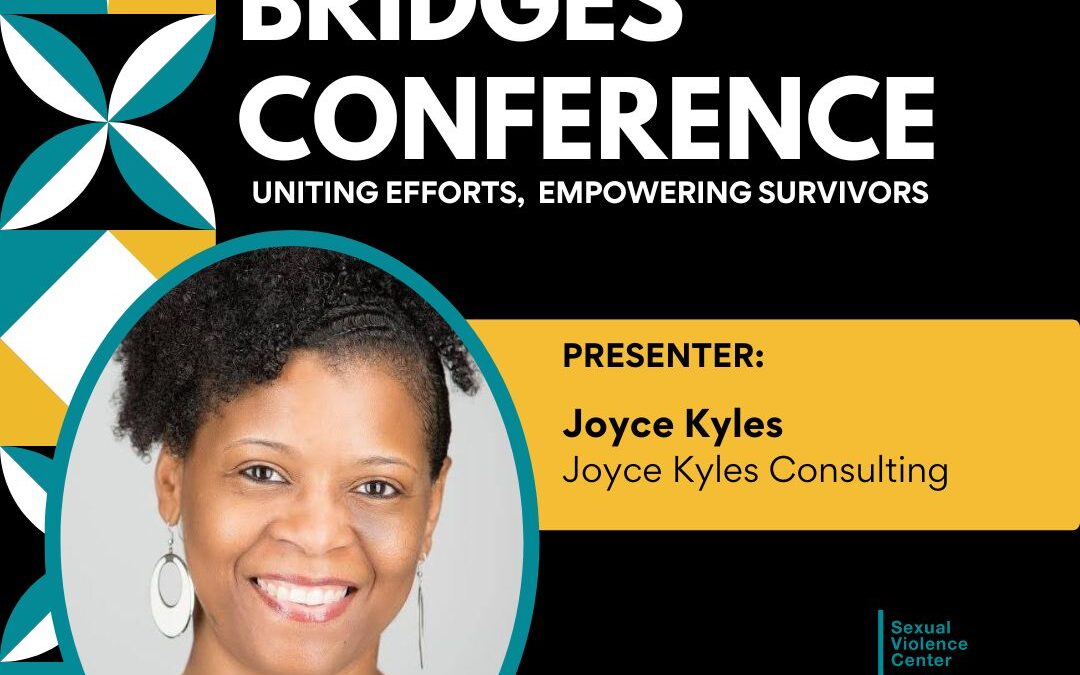
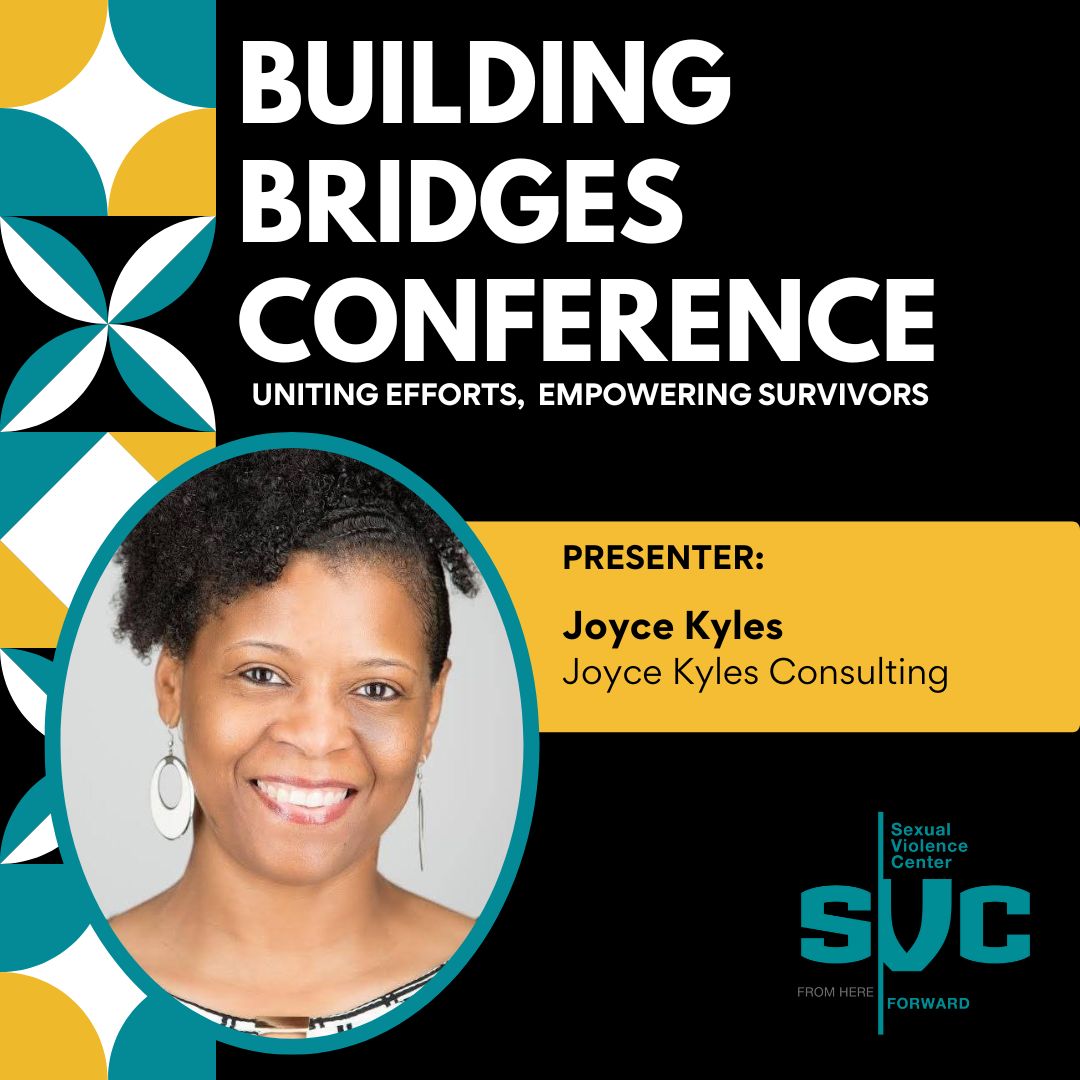
I am really excited to be a presenter for the upcoming Building Bridges Conference being hosted by the Sexual Violence Center in Minnesota on November 20, 2024. The following is an excerpt taken from promotional material regarding my presentation. Be sure to visit their website to learn more about the conference, scholarship opportunities, and the organization as a whole.
“In “Building Resilience and Restoration: Maintaining Wellness Strategies to Thrive”, Joyce Kyles of Joyce Kyles Consulting guides attendees through survivor-centered wellness and resilience strategies. Explore both traditional and innovative methods to establish survivor trust and support holistic success. Network with peers, share strategies, and leave with tangible resources to support your wellness goals. Be part of this journey at the Building Bridges Conference 2024!” November 20, 2024 Mystic Lake Casino Hotel, Prior Lake Register at:sexualviolencecenter.org
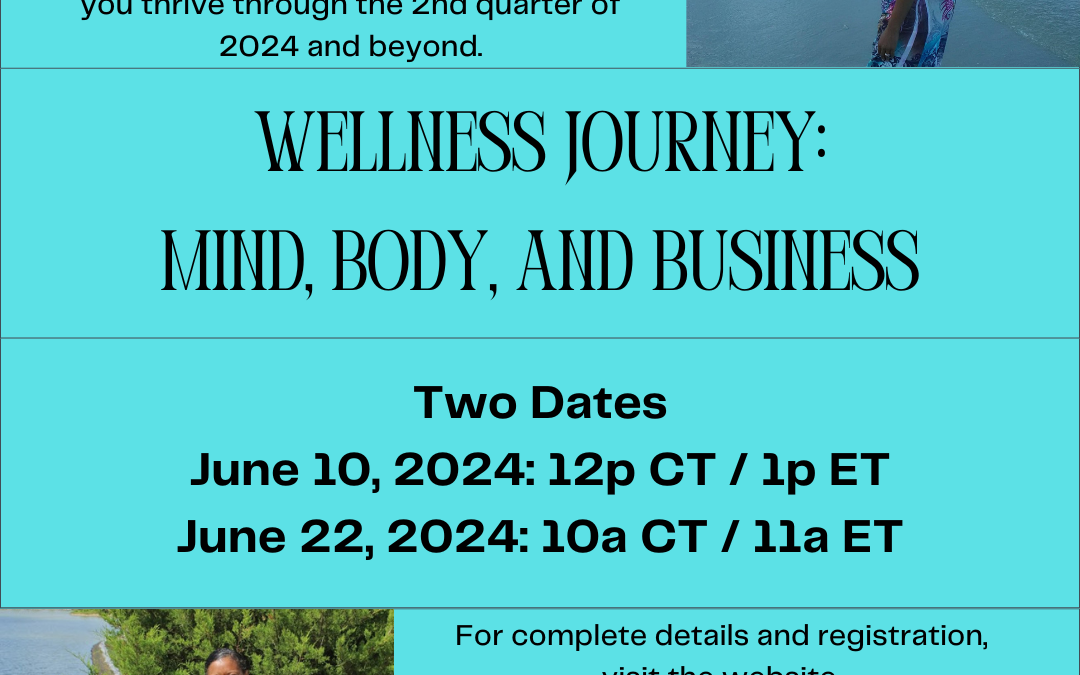
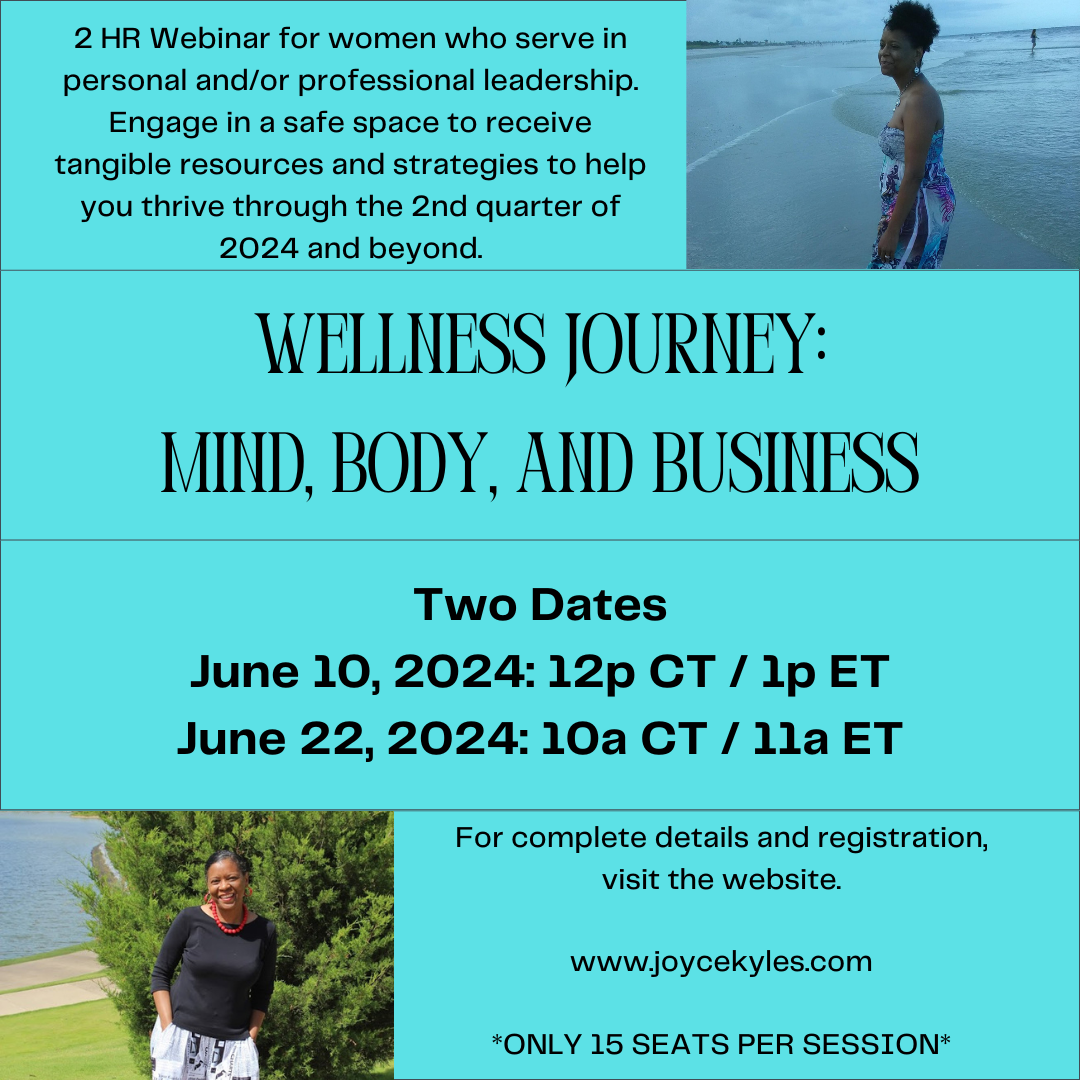
Holistic wellness is important to me. And if you’re here, I believe it’s because it’s important to you as well. This 2-hour webinar will provide a high-level overview excerpt of my packaged wellness program for women in leadership. If you’re a mom, wife, sister, aunt, CEO, Executive Director, manager, then you’re in leadership and this session is for you. I usually offer one discounted program of this type around this time every year. Based on several responses/requests I’ve received, wellness was one of two topics that continued to come up.
During our time together, I’ll provide you with some tangible resources and takeaways that you can implement immediately. We’re nearly halfway through the year, and many women are looking for ways to reset and recharge. I invite you to attend this session with my commitment to you to provide an interactive, safe space to relax, receive, and reset. There are only 15 slots per session, so secure your space early.
The cost is $97 and there are two options for attendance. Upon payment, you will receive a welcome from me and your name will go into a drawing for a wellness gift I’m purchasing from The Wellness Station (owner Elizabeth Dorse Meriwether). The winner will be announced at the end of each webinar (must be present to win). You’ll receive your webinar link to attend within 48 hours of the date you selected.