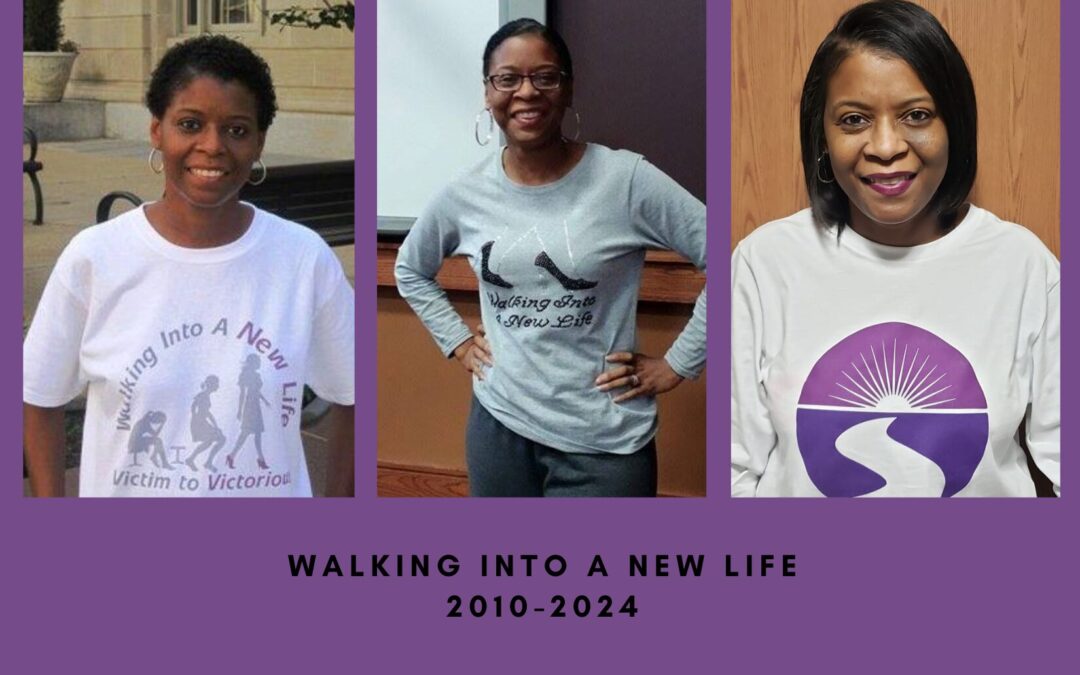
I officially closed the doors to my nonprofit exactly two years ago. The winding path and sunset in the first photo are even more meaningful now, as I offer my services to advise professionals on how to navigate the operational challenges they may be facing, personally and professionally.
When you hire me as your speaker, presenter, or coach, you are getting someone who understands that business and organizational transitions, transformations, and thriving are achievable, but not without the inclusivity of human-centered leadership and wellness strategies for work-life harmony and sustainability.
If we’re already working together, you already know I don’t take that for granted. If we’re not, I welcome the opportunity to do so. Let’s chat asap!
For many leaders, boundaries feel like a contradiction. We’re taught, often implicitly, that strong leadership means being always available, saying yes, pushing harder, and carrying the weight for everyone else. The unspoken fear is this: If I slow down or draw lines, performance will suffer.
In reality, the opposite is true.
Leaders who set clear, healthy boundaries don’t dilute performance. They protect it.
Modeling Boundaries Gives Permission
Leadership is always louder than policy. When leaders respond to emails at all hours, skip breaks, or normalize overload, teams may perceive boundaries as optional or unsustainable. Demonstrating consistent boundary-setting reinforces their importance and builds credibility.
But when leaders model boundaries, block time for focus, honor time off, and set meeting norms, they send a powerful signal: Well-being and performance are not just compatible but mutually reinforcing, fostering trust and safety within the team.
That signal builds trust. And trust accelerates performance.
Boundaries Strengthen Accountability
Contrary to popular belief, boundaries don’t lower expectations. They sharpen them.
When leaders are clear about scope, timelines, and responsibilities, teams know exactly where ownership begins and ends. This reduces confusion, minimizes rework, and allows people to perform at their best without second-guessing or overextending.
Boundaries make accountability fair—and fairness fuels engagement, motivating teams to invest their best efforts with confidence and clarity.
Sustainable Performance Is the Goal
In today’s workplace across healthcare, corporate, nonprofit, and hybrid environments, leaders who prioritize longevity and well-being will build resilient teams that can adapt and succeed over time.
Setting boundaries is not stepping back from leadership. It’s stepping into it.
When leaders establish clear boundaries, they create space for focus, alignment, and resilience. And that’s how teams don’t just perform. They thrive.
If this sounds like a topic occurring within your business or organization, I welcome the opportunity to explore ways we can work together.
Burnout rarely arrives with a dramatic announcement. It doesn’t always look like exhaustion, tears, or someone saying, “I can’t do this anymore.” More often, burnout shows up quietly—camouflaged as competence, commitment, or compliance.
And that’s why so many of its signals are either missed, minimized, or misinterpreted.
When someone is always “on,” always available, and always carrying more than their share, burnout may already be in motion. Others may appreciate the behavior, but the depletion behind it goes unseen.
Withdrawal Is Often Misread as Disengagement
Burnout doesn’t always look like stress—it can look like distance.
Employees experiencing burnout may:
Speak less in meetings
Stop offering ideas or feedback
Decline optional opportunities
Do exactly what’s asked—and nothing more
These behaviors are often labeled as disengagement or attitude problems, when they may actually be signs of emotional exhaustion and self-protection.
Burnout doesn’t always push people out. Sometimes it causes them to pull back.
These behaviors are often labeled as disengagement or attitude problems, when they may actually be signs of emotional exhaustion and self-protection.
Burnout doesn’t always push people out. Sometimes it causes them to pull back.
Irritability Gets Labeled as a Personality Issue
Short tempers, impatience, and decreased tolerance are frequently misinterpreted as personal shortcomings rather than signals of overload.
When stress is chronic, emotional regulation becomes harder. Leaders who overlook this context may address behavior without addressing the conditions creating it—missing an opportunity for real intervention.
Absences Are Treated as Isolated Events
Increased sick days, frequent appointments, or last-minute time off can be early indicators of burnout. Too often, these patterns are viewed in isolation instead of as part of a larger wellness picture.
Burnout affects the body as much as the mind. When organizations fail to connect the dots, they address symptoms rather than sources.
Silence Is the Loudest Signal
Perhaps the most dangerous signal of burnout is silence.
Employees stop asking for help when they believe it won’t change anything—or when they fear the consequences of being honest. A lack of complaints is not proof of well-being. It may be evidence of resignation.
Leaders who equate quiet with contentment often discover the truth too late—during an unexpected resignation or performance decline.
Why Leaders Miss the Signals
Burnout signals are missed not because leaders don’t care, but because systems normalize urgency, reward endurance, and undervalue recovery. When pressure becomes standard, warning signs blend into the background.
But leadership requires discernment—not just output tracking.
Seeing What Matters
Identifying burnout early means paying attention to patterns, not just performance. It means asking better questions, creating psychological safety, and designing work that allows people to recover, not just produce.
Burnout is not a personal failure. It’s a leadership and systems challenge.
Leaders who learn to recognize the subtle signals don’t just prevent burnout. They protect performance, trust, and longevity. That’s how organizations truly transition, transform, and thrive.
If this sounds like a topic occurring within your business or organization, I welcome the opportunity to explore ways we can work together.
Rest is often positioned as something earned after exhaustion rather than a strategy that prevents it. This mindset quietly reinforces burnout while pretending to value wellness.
Leaders frequently search for ways to reduce burnout or how they can improve the wellbeing of employees. Far too often, however, they overlook what may be the most powerful insight of all. I personally feel that powerful insight is rest being a leadership decision.
Somewhere along our professional journey, speed became synonymous with success. Rest became associated with weakness, inefficiency, or lack of commitment. In many organizational cultures, rest only appears after problems arise and begin to spiral downhill.
What Strategic Rest Looks Like
Strategic rest is intentional. It includes the following:
*Recovery periods after high-demand seasons *Realistic timelines *Permission to disconnect *Leaders modeling pauses without apology
This applies across healthcare systems, nonprofits, corporate teams, and global organizations alike.
What happens when you ignore rest? Decision quality can decline, mistakes tend to increase, and morale erodes. Rest sustains productivity. Organizations that thrive long-term treat rest as a key component to their infrastructure. Leadership is more than driving outcomes. It is about ensuring the sustainability of the people relied upon to deliver the needed results
Very happy to share that my business is a featured story in the Tennessee Highlighter. In the article, I talk about the importance of taking risks and provide an overview of my business. I was also asked about my favorite places to eat and where I’d go to have a good time with friends. It was a great interview, and it gave me the chance to talk about two of my favorite things: my business and all things food! Check out the article here: https://tennesseehighlighter.com/meet-joyce-kyles-global-speaker-master-certified-coach/