When teams are under pressure, budgets tighten, and leaders are asked to do more with less, one of the first “soft” initiatives that gets cut is psychological safety. There is a belief that team members can speak up, ask questions, and admit mistakes without fear of negative consequences.
But there’s a leadership paradox most organizations miss that is extremely important. In the toughest times, psychological safety doesn’t become less important. It actually becomes essential.
What Psychological Safety Really Is
At its core, psychological safety means that people feel secure enough to contribute their thoughts, raise concerns, and offer ideas — even when those ideas push back against the status quo. It’s not about being “nice.” It’s about creating an environment where candor, risk taking, and authentic dialogue are normalized.
Why Many Leaders Treat It as a Luxury
When resources are strained, organizations often shift focus to tactical training programs or performance metrics, assuming that psychological safety can wait. But research from faculty including Harvard Business Review scholars shows that this perspective is flawed.
During times of stress, uncertainty, or transformation, the ability to speak up safely becomes one of the strongest protective forces against burnout, dysfunction, and turnover. In fact, employees who reported feeling safe speaking up before the crisis hit were more resilient during the crisis.
What’s at Stake When Safety Is Ignored
When psychological safety is absent, teams don’t just experience surface-level discomfort. Their nervous systems switch into protection mode. People hold back ideas, withhold feedback, and default to compliance instead of collaboration. The results include:
burnout climbs
trust erodes
innovation stalls
turnover spikes
These outcomes aren’t abstract HR metrics. They directly impact organizational performance, sustainability, and resilience.
Psychological Safety as a Social Resource
One of the most powerful findings from recent research: psychological safety functions like a social resource. When people feel safe to speak up, even in small ways, it creates a ripple effect of support, shared problem-solving, and mutual trust that helps teams endure turbulence.
This means:
People don’t just survive tough times. They navigate them with agency and confidence.
Leaders get real, actionable information before problems become crises.
Organizations cultivate resilience, retention, and strategic adaptability.
What Great Leaders Do Differently
High-performing, future-ready leaders don’t treat psychological safety as a checkbox. They treat it as an operating system woven into how teams communicate, respond to failure, and make decisions. They model vulnerability and learning. They invite and value dissenting views. They normalize candid conversations, protect time and focus for meaningful dialogue. This isn’t about comfort. This is about performance under pressure.
The Leadership Imperative in 2026 and Beyond
In today’s complex work environment where economic uncertainty, talent shortages, and rapid change are the norm, psychological safety isn’t optional. It’s a fundamental leadership requirement for building trust, supporting wellness, and unlocking organizational potential. Simply put: If your organization isn’t intentionally cultivating psychological safety, you are managing symptoms for the potential of deeper dysfunction. And that’s not leadership. That’s maintenance.
Burnout isn’t new. It’s persistent, growing, and now deeply entrenched in our workforce reality.
Yet, despite billions spent on wellness programs, too many organizations are still spinning the same wheel: meditation apps, lunchroom snacks, and workplace “perk” checkboxes. The results? Minimal impact on burnout, engagement, or true workplace well-being. It’s time to think differently.
We’ve treated wellness as an optional feature. It’s a line item in HR’s budget rather than the structural foundation of work itself. And that’s exactly why it’s time to bring a healthcare mindset into workplace strategy.
The Wellness Investment Disconnect
Today’s wellness investments outpace ever before. Nearly 85% of large U.S. employers offer wellness programs, and global spending on workplace wellness is projected to exceed $94 billion by 2026. Yet burnout and declining mental health metrics tell a stark story: we’re not solving the real problem.
Why? Because we’ve been treating wellness like:
an individual responsibility
an isolated benefit
a program outside the core workflow
This is exactly the flaw many healthcare systems stopped repeating decades ago. They realized that health outcomes aren’t driven by pills or check-ups alone — they are shaped by systems, environments, and daily context.
The Healthcare Mindset Shift
Healthcare doesn’t look at patient wellness as a “nice-to-have” — it treats the environment, systems, and social context as integral parts of care. We need that same approach in the workplace.
Workplace wellness must be:
Embedded in workflows and spaces
Integral to leadership decisions and design choices
Wellness can no longer be delegated to a room you walk past, an app you seldom open, or a lunchtime seminar you forget weeks later.
What Real Wellness Looks Like
In healthcare, we understand that healing and prevention happen because of the systems around people and not in spite of them. Workplaces must adopt this perspective:
Wellness isn’t a perk. It’s infrastructure. Every design choice, from lighting and acoustic comfort to movement flow and social spaces, affects human physiology, cognition, and emotional resilience.
Why This Matters Now
As organizations compete for talent and wrestle with engagement, turnover, and productivity, the companies that think systemically and not superficially, will win:
Innovation thrives where stress is reduced
Performance increases when environments reduce friction
This isn’t soft language. It has a strategic impact. Just as healthcare environments are designed to promote healing, rest, and recovery, workplaces must be designed to promote thriving, clarity, and human sustainability.
Bringing Human-Centered Empathy to Work
True workplace design asks:
Does this space support focus, comfort, movement, connection, or autonomy?
How does this workflow affect nervous systems, not just KPI dashboards?
Are environments responding to human needs holistically — not just in fragmented pockets?
This is a healthcare mindset.
This is a human-first approach to organizational wellness. And this is what the future of work demands. Once leaders embrace wellness as an operating system. It is not an accessory. We unlock spaces and systems that actually sustain people, teams, and performance.
The workplace is no longer just a site of labor. It is a shared ecosystem that must support human well-being in real, measurable ways.
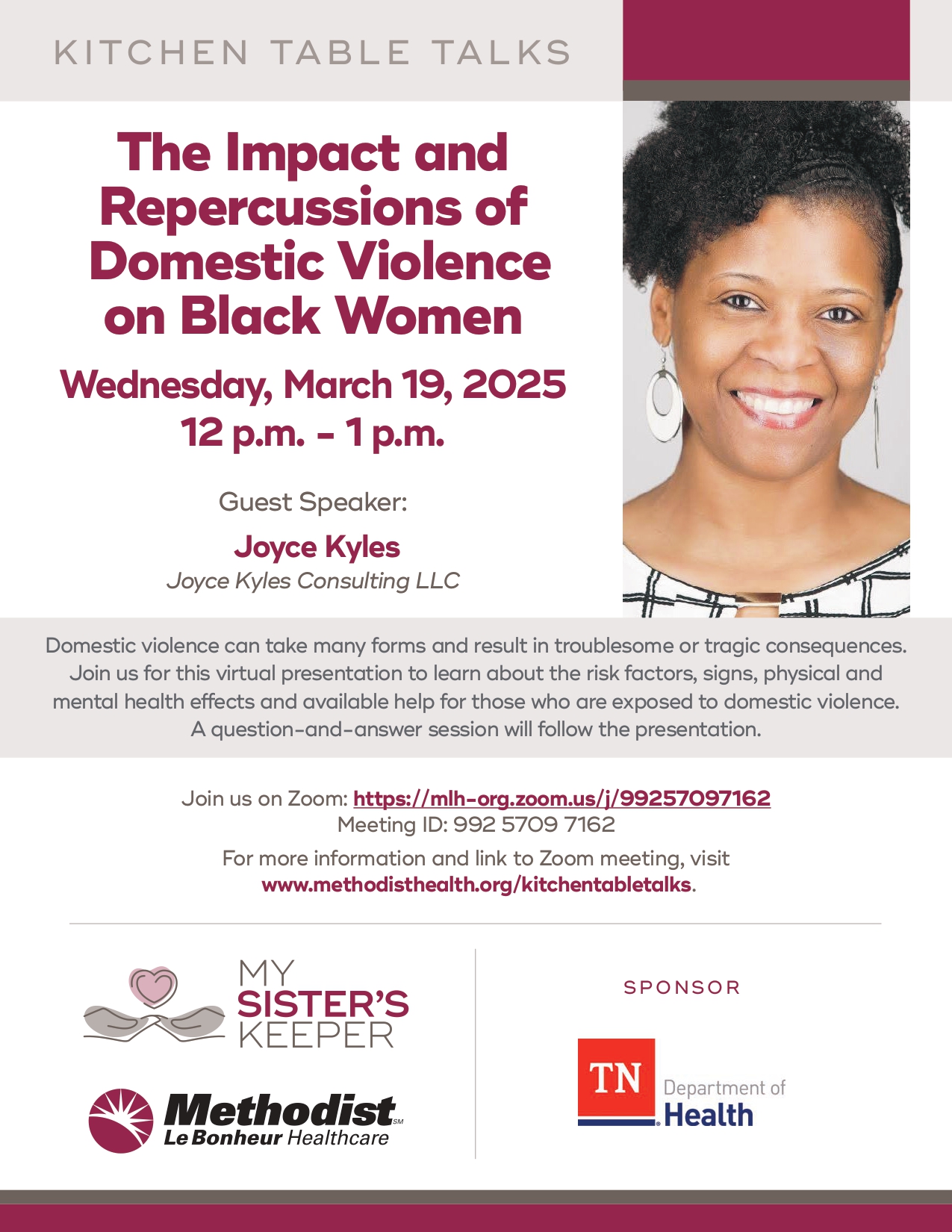
Please make plans to join me virtually as I present during this month’s Kitchen Table Talks. This monthly event is hosted by Methodist LeBonheur Healthcare and sponsored by the TN Department of Health. I’ll be speaking on the impact and repercussions of domestic violence on Black women.
Domestic violence can take many forms. We’ll discuss risks, knowing the signs, resources for assistance, and more. Join us on Wednesday, March 19, 2025, from 12 pm to 1 pm CT via Zoom. This informative event is free and open to the public.
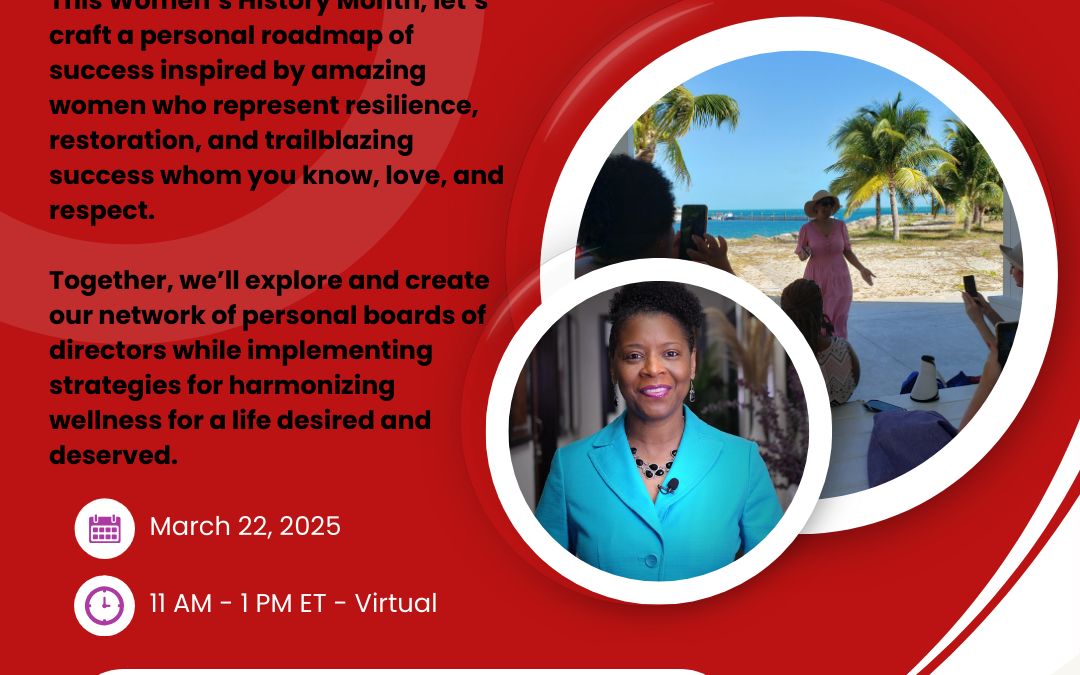
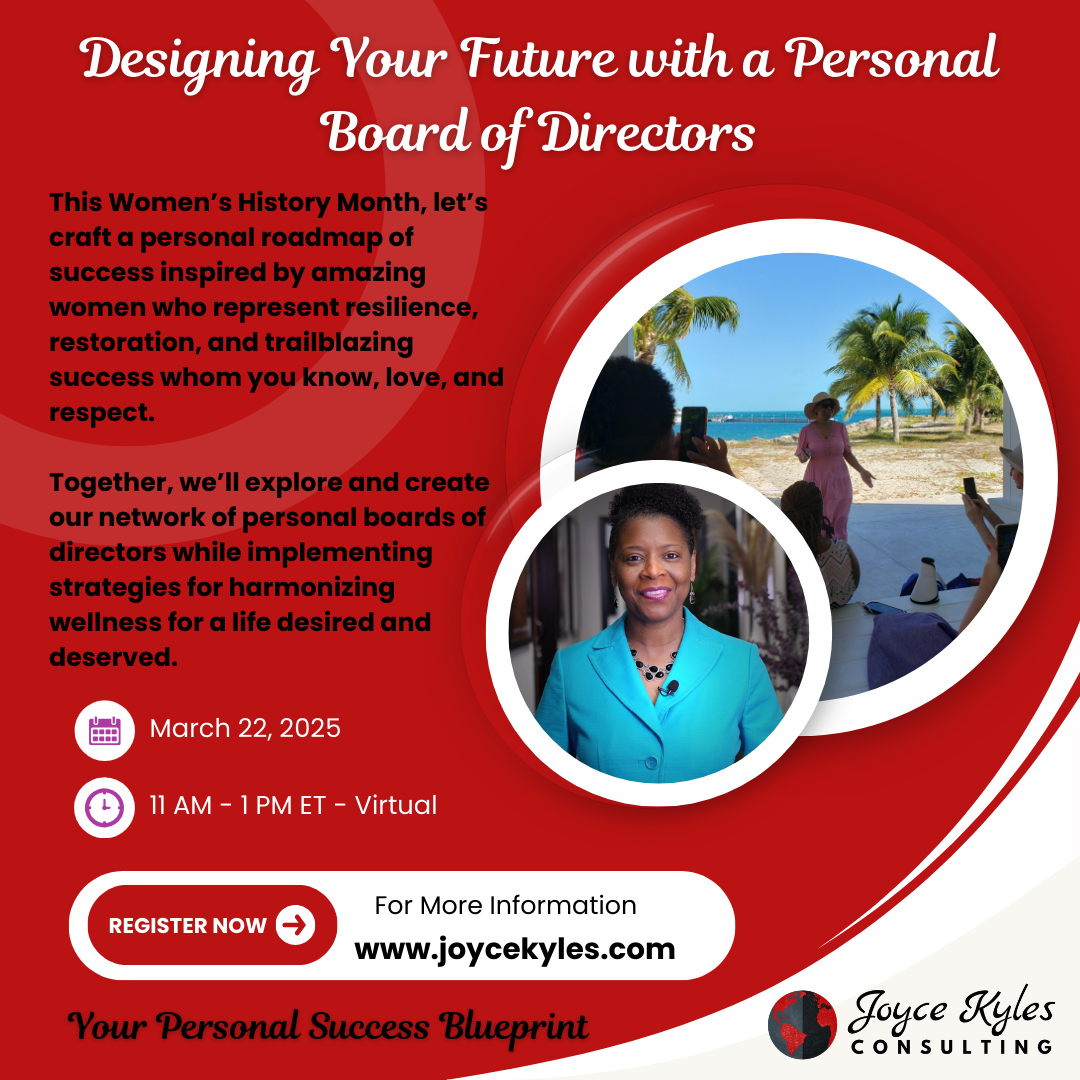
This Women’s History Month, let’s craft a personal roadmap of success inspired by amazing women who represent resilience, restoration, and trailblazing success whom you know, love, and respect.
Together, we’ll virtually explore and create our network of personal boards of directors while implementing strategies for harmonizing wellness for a life desired and deserved.
There will be a combination of presentations and activities to guide your end of Quarter 1 with tools, resources, and connections to guide your holistic potential for success. You may be surprised by what you learn about yourself and the women around you. Your village awaits, and someone may be waiting on YOU!
And of course, there will be a few giveaways because that’s what I always do! 🙂
EARLY BIRD RATE ENDS 2/8/24. Registration confirmed with payment.
Date: March 22, 2025 Time: 11 am ET to 1 pm ET / 10 am CT to 12 noon CT
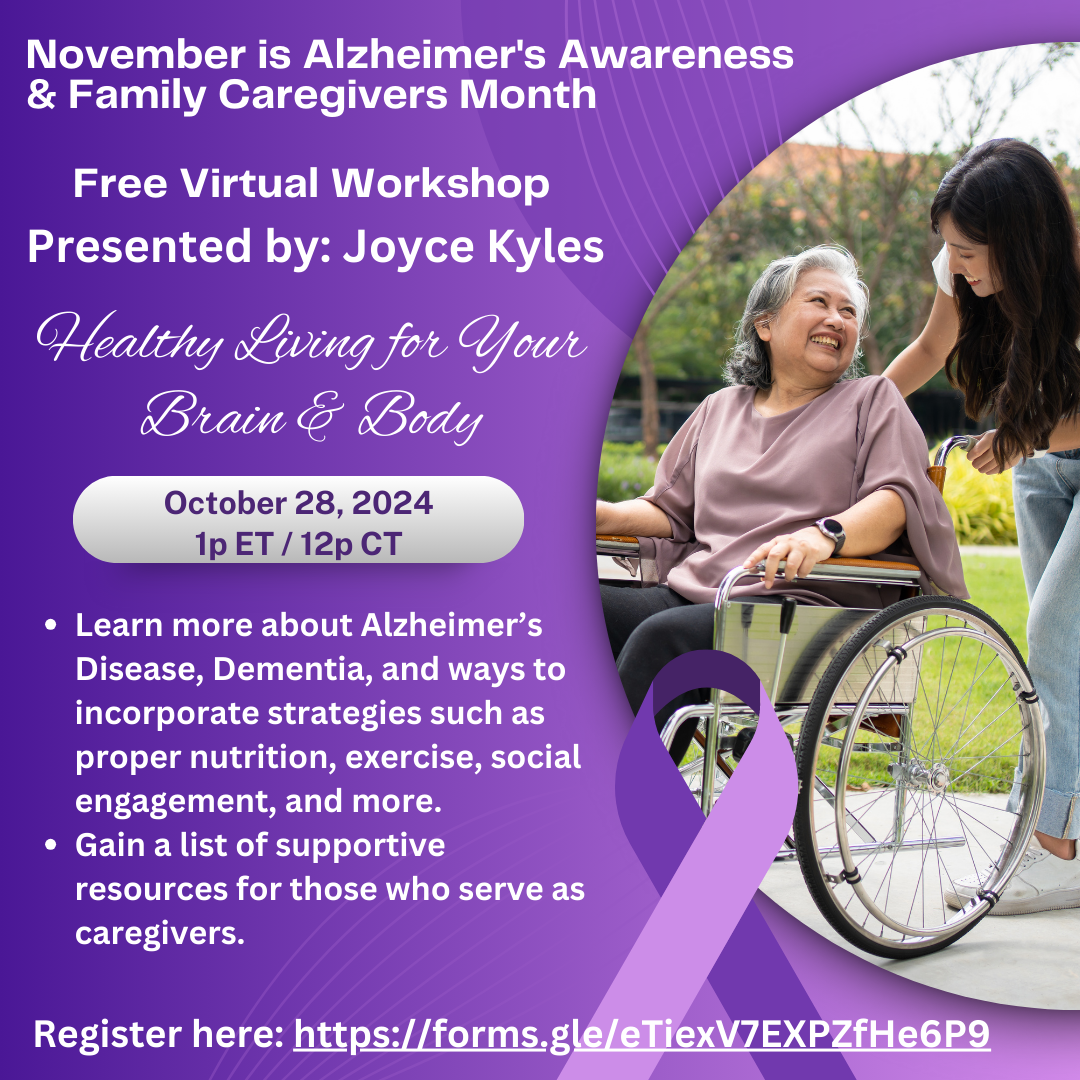
I proudly serve as a volunteer for the TN Alzheimer’s Association. November is National Alzheimer’s Awareness Month & National Family Caregivers Month. As we prepare, please join me as I give a free presentation entitled “Healthy Living for Your Brain and & Body. You will learn more about Alzheimer’s Disease, Dementia, and ways to incorporate strategies such as proper nutrition, exercise, social engagement, and many other tools and resources to encourage and support a longer, healthier life. You will also gain a list of supportive resources for those who serve as caregivers.