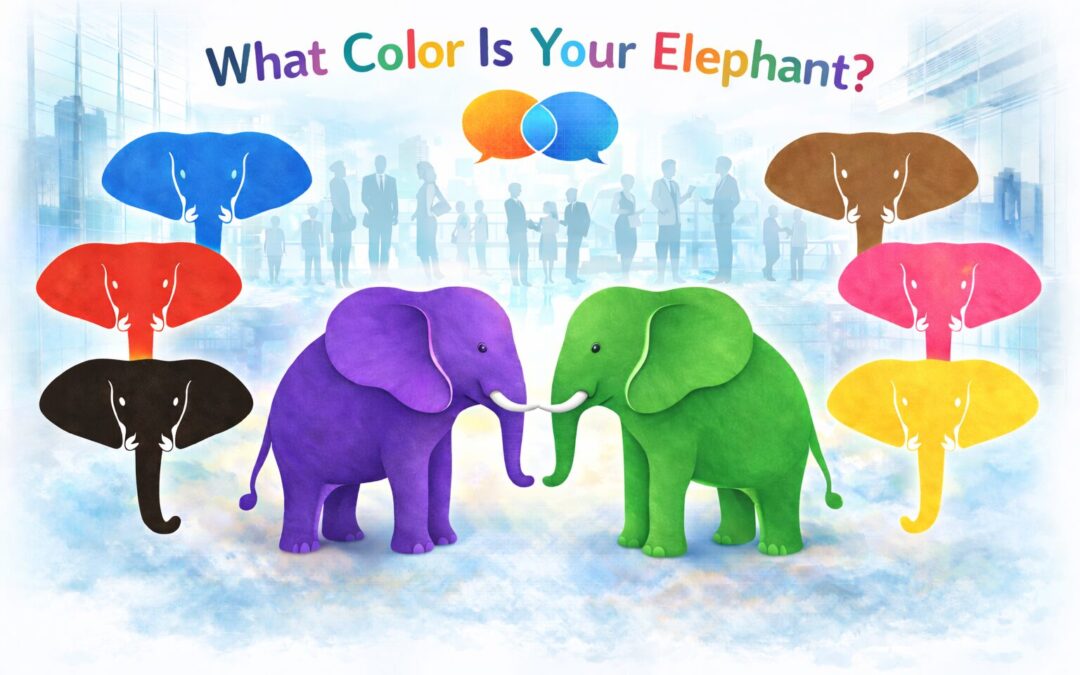
One of the reasons I created What Color is Your Elephant? centers around the topics that no one wants to talk about, yet everyone sees and knows about them. There are actually quite a few. The fear of consequences and repercussions may be real, implied, or imagined. Leaders and leadership styles are different. Office cultures vary. What I’ve learned over the years for certain is that silence tends to speak loudly.
There are so many leaders and team members alike who are tired. They’re feeling the burnout. Complete focus on wellness is taking a back seat, with solutions only partially addressed by band-aid remedies. There’s little joy in the journey. Instead, work feels like more of the same mundane routines, less about people and more about quantity than quality.
Leaders, I offer you the advice of listening to what your teams aren’t telling you. If turnover is high but morale is low, offering a day off work isn’t gonna cut it. Teams, if you’re not comfortable talking with management but only talking among yourselves, the likelihood that impactful change will happen is very low.
What Color is Your Elephant? is designed to bring strategic conversations in the room around the deafening silence that’s prohibiting short and long term transformation to take place. And with conversation comes clarity, confidence, and courage to meet and overcome obstacles so that thriving is a reality.
Need guidance to get the conversation started or strategies on how to keep it going for more meaningful, successful outcomes? Let’s chat and make strides to transition, transform, and thrive-together.
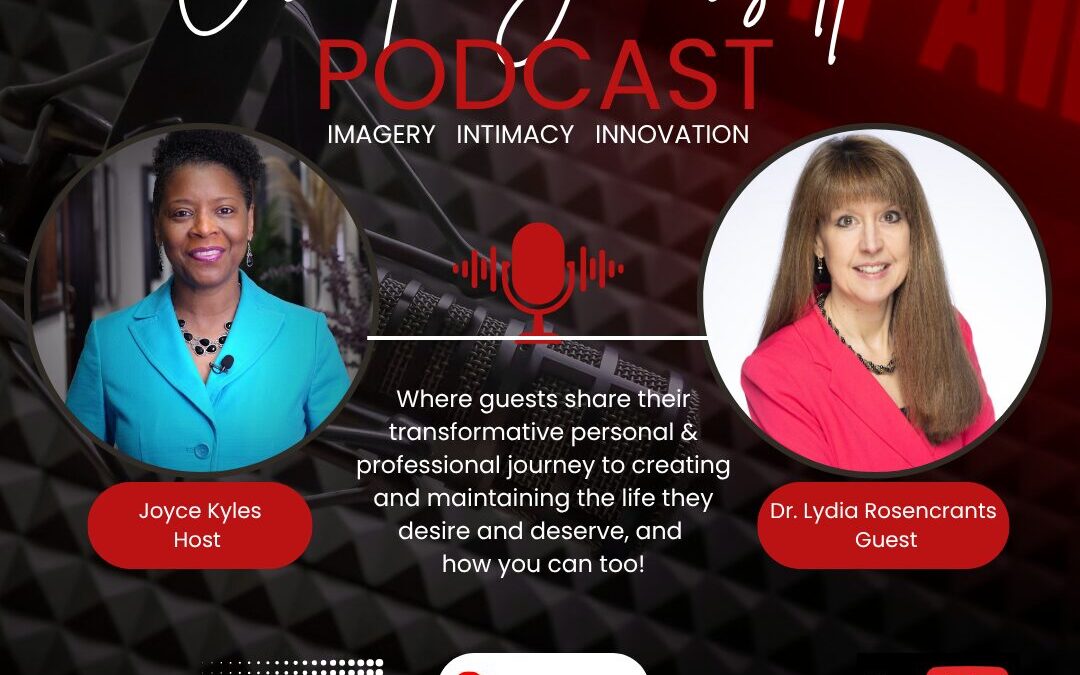
Dr. Rosencrants always knew she wanted to be a professor. A lover of connection and servant leadership, she shares how she’s created and leads programs in multiple states while being a wife and mom of 13. She’s a lifelong learner who understands the power of faith, organization, purpose, planning, and community building, and offers actionable steps to implement in business and life. It’s an honest, engaging, and insightful interview to lean in and learn from.
If you’re the person everyone turns to when things go wrong, you already understand the emotional labor of leadership.
You are the steady voice in the room when tensions rise. The calm presence during uncertainty. The one who listens, reassures, guides, and encourages, even when you may be carrying your own concerns quietly in the background. That unseen effort is called emotional labor, and it has become one of the most overlooked realities of modern leadership.
Today’s leaders are expected to do more than manage projects or meet quarterly goals. They are asked to support team wellbeing, navigate workplace stress, address burnout, and maintain a culture where people feel supported and able to do their best work. These expectations require something deeper than technical expertise. They require presence, empathy, and emotional resilience. In other words, leadership today requires heart.
But there’s a challenge many leaders face. While organizations depend on leaders to hold the emotional center of the workplace, very few leaders are given the tools to sustain themselves while doing it. And yet, leaders often carry this responsibility alone.
Many leaders have shared a similar story. They are the ones who support everyone else, but rarely have a place to recharge themselves. Over time, that imbalance can lead to decision fatigue, stress, and leadership burnout. This is why sustainable leadership matters.
The goal is to ensure that compassion is sustainable.
When leaders are supported, something powerful happens. They become more present, more thoughtful in decision-making, and more capable of guiding their teams through both challenges and opportunities. Organizations that recognize the emotional labor of leadership and equip leaders with the tools to navigate it create environments where both leaders and teams can truly thrive.
If you are the person people turn to when things go wrong, that speaks volumes about your leadership. It means people trust your steadiness. They trust your judgment. They trust your presence. But leadership was never meant to be carried alone. The strongest leaders understand an important truth: when leaders are supported, teams flourish, cultures strengthen, and organizations move forward with clarity and purpose.
Leadership, at its best, creates the conditions where people can transition through challenges, transform their potential, and ultimately thrive.
If you’re trying to create a workplace where people feel seen, valued, and motivated, you’re doing leadership differently, and that matters.
For many years, leadership was measured primarily by outcomes including productivity, profitability, and performance metrics. Those elements still matter, of course. Every organization must meet goals and deliver results. But the most effective leaders today understand something deeper: how people feel at work directly influences how they perform.
When people feel respected, supported, and recognized, they show up differently.
They contribute ideas. They collaborate more openly. They remain engaged during challenging seasons. They become invested in the success of the team and the organization.
Creating that kind of workplace does not happen by accident. It requires intentional leadership.
Leaders who prioritize a healthy leadership culture focus not only on what needs to be accomplished, but also on how people experience their work environment. They understand that motivation is not driven solely by incentives or titles. It grows when individuals feel their contributions matter.
In today’s workplace, employees are paying close attention to leadership behavior. They are asking questions such as, “Do I feel respected here?” Does my voice matter? Is this a place where I can grow?
And when people know they matter, their motivation increases.
Of course, leading this way requires intentionality. It requires leaders to move beyond transactional management and toward relational leadership. It asks leaders to be present, listen carefully, and consider how decisions affect the people carrying out the work.
That kind of leadership creates stronger teams and more resilient organizations.
Leaders who cultivate environments where people feel seen and valued are building something powerful: workplaces where trust grows, innovation thrives, and teams work together with shared purpose.
If you are working to create that kind of culture, you are leading in a way that reflects the future of leadership.
And that matters more than ever. Because when leaders create environments where people feel respected, supported, and motivated, something remarkable happens: individuals grow, teams strengthen, and organizations move forward with renewed clarity and momentum. That is how workplaces and the people within them, continue to transition, transform, and thrive.
There are times in every career when progress seems slower than expected. For some people, this manifests as a prolonged job search, with numerous applications submitted without many responses. For other people, it surfaces in the quieter moments of building a business, such as creating, pitching, and networking. The long game is a challenge all its own.
Right now, many professionals are experiencing this slow phase.
It can be discouraging to put in hard work and not see the immediate results you hoped for and need. The effort and commitment are real, yet breakthroughs often take longer than anticipated.
It’s important to remember that periods of building are rarely visible to the outside world. Behind every successful transition, promotion, contract, or new role lies a time when someone persisted, even when the momentum felt uncertain and uncomfortable. It is here where resilience and continued focus are key.
If you are seeking employment, remember that your skills, experience, and perspective are still valuable, even when there’s a delay in results. The right opportunity doesn’t always show up right away. It’s the one aligned with where you can best contribute and grow.
If you are running a business, be reminded that entrepreneurship requires persistence that others may not fully appreciate. Every connection made, conversation initiated, and idea developed is part of a larger strategy that unfolds over time.
In either case, I encourage you to keep pushing forward. Do not self-doubt. Do not give up. Consistently taking small steps often leads to the most meaningful outcomes. Here’s one you can start immediately:
Make a list of 10 colleagues and 10 friends/family members, complete with email addresses and phone numbers. Email or call them directly regarding your employment and/or business needs. If you call first and there’s no answer, leave a message. Follow up with an email. If you start with mail and don’t get a response within a full business day, follow up with a call. That’s 20 touches this week. One thing to note: your friends/family members may not be your ideal clients or places to work. However, they have the potential to work with and are friendly with people within their circles who are.
I’m practicing what I preach. I’m believing in myself and my efforts. I’m working through my list now. If you have any tools, tips, resources, leads, or words of encouragement for all who may read and can relate, please share them in the comments. Let’s continue to transition, transform, and thrive-together.
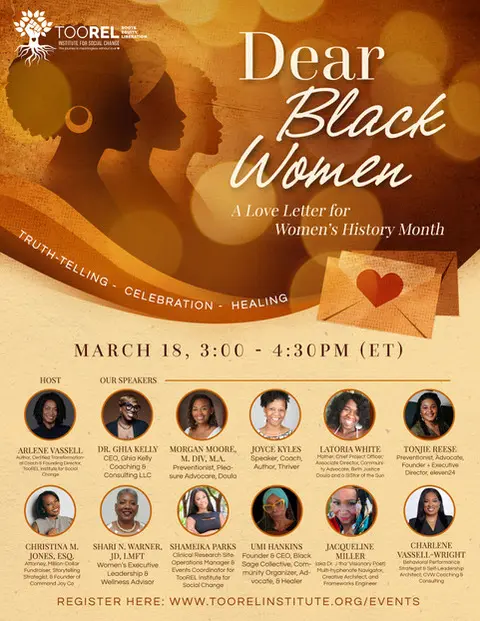
I am honored to be a part of a powerful gathering of Black women for the virtual event “Dear Black Women…A Love Letter for Women’s History Month.” This sacred space will center truth-telling, celebration, and healing across generations. Registration is now open!